
Life After Social Media: Emptiness, Goals, and the Truth About a Quality Life
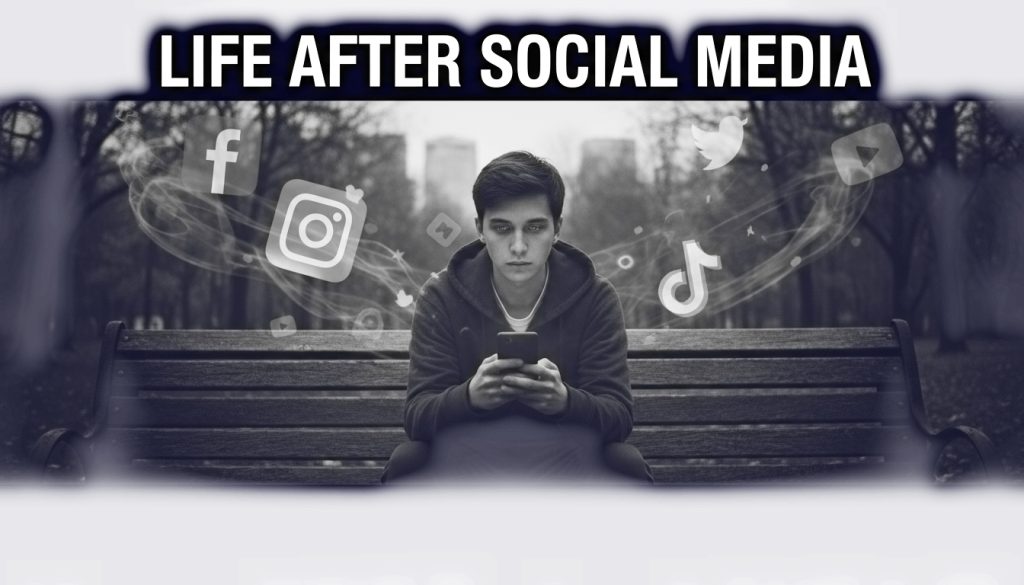
Life After Social Media, The Quiet Problem No One Talks About
We live in an era where social media has become inseparable from our daily lives. Platforms like Facebook, YouTube, Instagram, TikTok, and X (formerly Twitter) are no longer just tools for communication. They shape how we think, how we feel, how we compare ourselves to others, and even how we define success and happiness.
For many people, social media fills the empty moments of life—waiting in line, lying in bed at night, commuting, or taking a short break from work. Without realizing it, these platforms slowly occupy a significant portion of our time, emotional energy, and mental focus.
At some point, a realization hits:
“If I truly want to improve my life—financially, mentally, and emotionally—I need focus. And that means reducing or even leaving social media.”
So people try it.
Seven days. Thirty days. Sometimes even longer.
At first, it feels empowering. More time. Less distraction. A sense of control.
But then, something unexpected happens.
A strange emptiness appears.
Loneliness.
Silence.
A subtle feeling of being disconnected.
Everything seems fine on the surface—yet something feels missing.
This article is a deep, realistic exploration of that experience. We will discuss:
- Why emptiness appears after leaving social media
- The psychology of instant vs. delayed gratification
- Why big goals often prevent us from enjoying the present
- What a “quality life” truly means
- Practical, realistic ways to deal with emptiness without running back to distraction
This is not motivational hype. It’s a grounded, human conversation.
Why Does Emptiness Appear After Leaving Social Media?
To understand the emptiness, we first need to understand what social media does to the brain.
Every like, comment, notification, short video, or message triggers a small release of dopamine—the brain’s reward chemical. These dopamine hits are not strong enough to create deep satisfaction, but they are frequent enough to keep us hooked.
Over time, the brain becomes accustomed to constant stimulation.
When stimulation disappears, silence feels uncomfortable.
Once social media is removed, people often experience:
- No notifications to check
- Fewer casual conversations
- Long stretches of unstructured time
That is when reality shows up.
The emptiness is not something new. It was always there.
Social media didn’t create the emptiness—it distracted us from noticing it.
This silence forces us to confront important questions:
- Do I have meaningful work?
- Do I have deep, honest relationships?
- Can I sit alone with my thoughts without escaping?
For many people, the answer is uncomfortable. And that discomfort is often mistaken for failure, when in reality, it is awareness.
The Role of Identity and Social Validation
Another reason emptiness appears is the sudden loss of external validation.
Social media constantly reinforces identity:
- “People like my thoughts.”
- “People notice my life.”
- “I matter because I’m seen.”
When that feedback loop disappears, many people feel invisible.
This can be deeply unsettling, especially in cultures where visibility is often confused with value.
But here is the truth:
Being unseen does not mean being insignificant.
In fact, many of the most meaningful transformations in life happen quietly, away from public attention.
Goals, Money, and the Silent Inner Conflict
Now let’s talk about goals—especially financial goals.
Imagine you have a major life goal, such as buying a house.
You tell yourself:
“Once I have enough money, then I’ll finally feel secure. Then I’ll be happy.”
At first, this mindset feels responsible.
But over time, subtle consequences appear:
- You delay small joys
- You stop spending on experiences that improve daily life
- You constantly tell yourself, “Not now—later”
Slowly, an uncomfortable question arises:
“Am I actually living, or am I just waiting?”
This creates an inner conflict.
On one side, you have discipline and long-term vision.
On the other, you have emotional fatigue and a lack of joy.
And then comes the deeper question:
If you sacrifice your present life entirely for the future, how meaningful will that future actually be?
The Psychology of Instant vs. Delayed Gratification
Human beings are biologically wired for instant gratification.
We want pleasure now.
We want relief now.
We want reward now.
That is why:
- Social media is addictive
- Junk food is tempting
- Procrastination feels comforting
Instant gratification feels good in the moment, but it often comes at the cost of long-term fulfillment.
Delayed gratification, on the other hand, is the ability to tolerate short-term discomfort for long-term gain.
People who achieve meaningful success—financially, creatively, or personally—tend to master delayed gratification.
Their thinking extends into the future:
- Two years from now
- Five years from now
- Ten or even twenty years ahead
Their present actions are guided by a clear vision of who they want to become.
This does not mean they never enjoy life.
It means they enjoy life intentionally, not impulsively.
Why Discipline Alone Is Not Enough
One common mistake people make is believing that discipline means constant sacrifice.
But extreme restriction often backfires.
When people deny themselves all joy in the name of productivity or savings, they eventually burn out—or relapse into unhealthy habits.
True discipline is not about punishment.
It is about balance.
A sustainable life includes:
- Purpose
- Rest
- Enjoyment
- Growth
Without balance, even the strongest goals can lose their meaning.
The Social Media Illusion and the Comparison Trap
One of the most damaging effects of social media is constant comparison.
What we see online is not reality—it is a highlight reel.
- Travel photos are filtered
- Success stories are edited
- Happiness is staged
A single photo can hide exhaustion, debt, loneliness, or anxiety.
Yet the brain compares your behind-the-scenes life with someone else’s curated moments.
This creates a false sense of inadequacy.
The problem is not where others go or what they have.
The problem is perspective.
People who know how to enjoy life can find peace almost anywhere.
People who live only to impress others often feel empty everywhere.
What Does a “Quality Life” Really Mean?
A quality life is often misunderstood.
It does not mean:
- Showing happiness online
- Owning expensive things
- Proving success publicly
A quality life means:
- Sleeping peacefully at night
- Feeling aligned with your values
- Being comfortable with your choices
- Maintaining balance between future goals and present living
If you have a big goal, it is not just a desire—it is a responsibility.
But destroying your present well-being to reach it is not wisdom.
Practical Ways to Deal With Emptiness (Without Escaping)
1. Replace Social Media With Skill, Not Silence
When social media disappears, don’t leave a vacuum.
Fill that time with:
- Walking
- Reading
- Writing
- Learning a skill
Boredom is not the enemy. Boredom builds depth.
2. Use the 80/20 Balance Rule
Dedicate:
- 80% of your effort to long-term goals
- 20% to present enjoyment
This could mean a simple coffee, a short trip, or a hobby.
Sustainability matters more than perfection.
3. Learn to Be Alone Without Escaping
Many people fear solitude because it reveals unresolved thoughts.
But not all emptiness is bad.
Some emptiness leads to clarity.
Some leads to self-discovery.
Some leads to growth.
4. Stop Comparing Your Life to Online Highlights
Remind yourself:
What you see online is edited.
What you live is real.
Depth beats appearance every time.
Final Thoughts: The Quiet Truth About a Quality Life
A quality life does not mean everyone sees how happy you are.
A quality life means one simple thing:
Can you sleep peacefully at night?
If the answer is yes, you are doing better than you think.
Do not fear the emptiness that comes after leaving social media.
Learn to understand it.
Sit with it.
Grow through it.
Because often, your next and better version is hidden inside that silence.
Join thousands of readers at NextGen Tech Zone. Get inspired, learn new skills, and create the life you want. Visit our website today